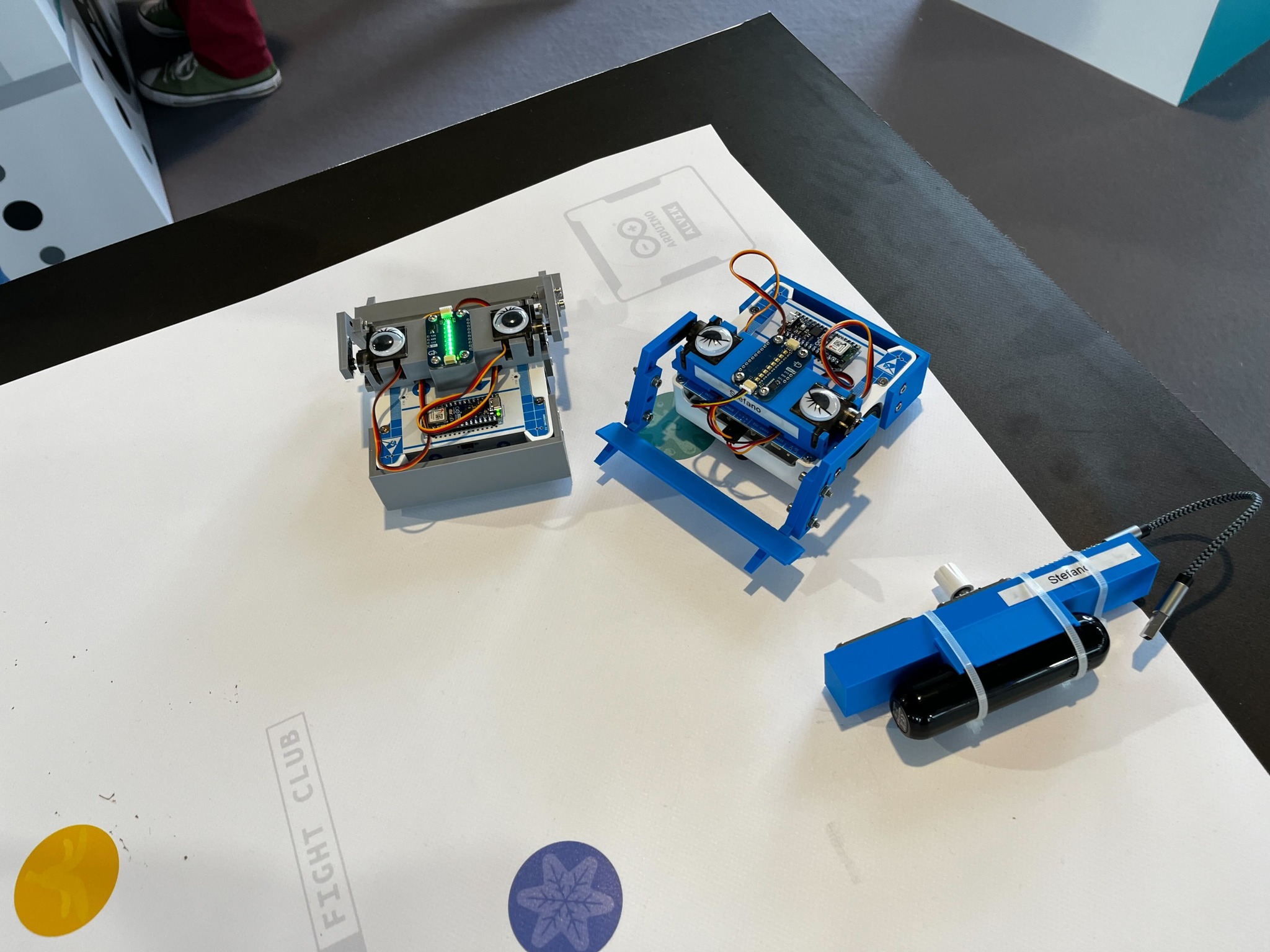
Last saturday we had a great day celebrating the Arduino Camp, hosting the traditional hackaton inside Officine Arduino and Fablab Torino spaces and the huge courtyard of Toolbox Coworking. Many people, cool projects, and a theme: “Reinventing interfaces of home appliances” (… interpreted in a very wide way, though).
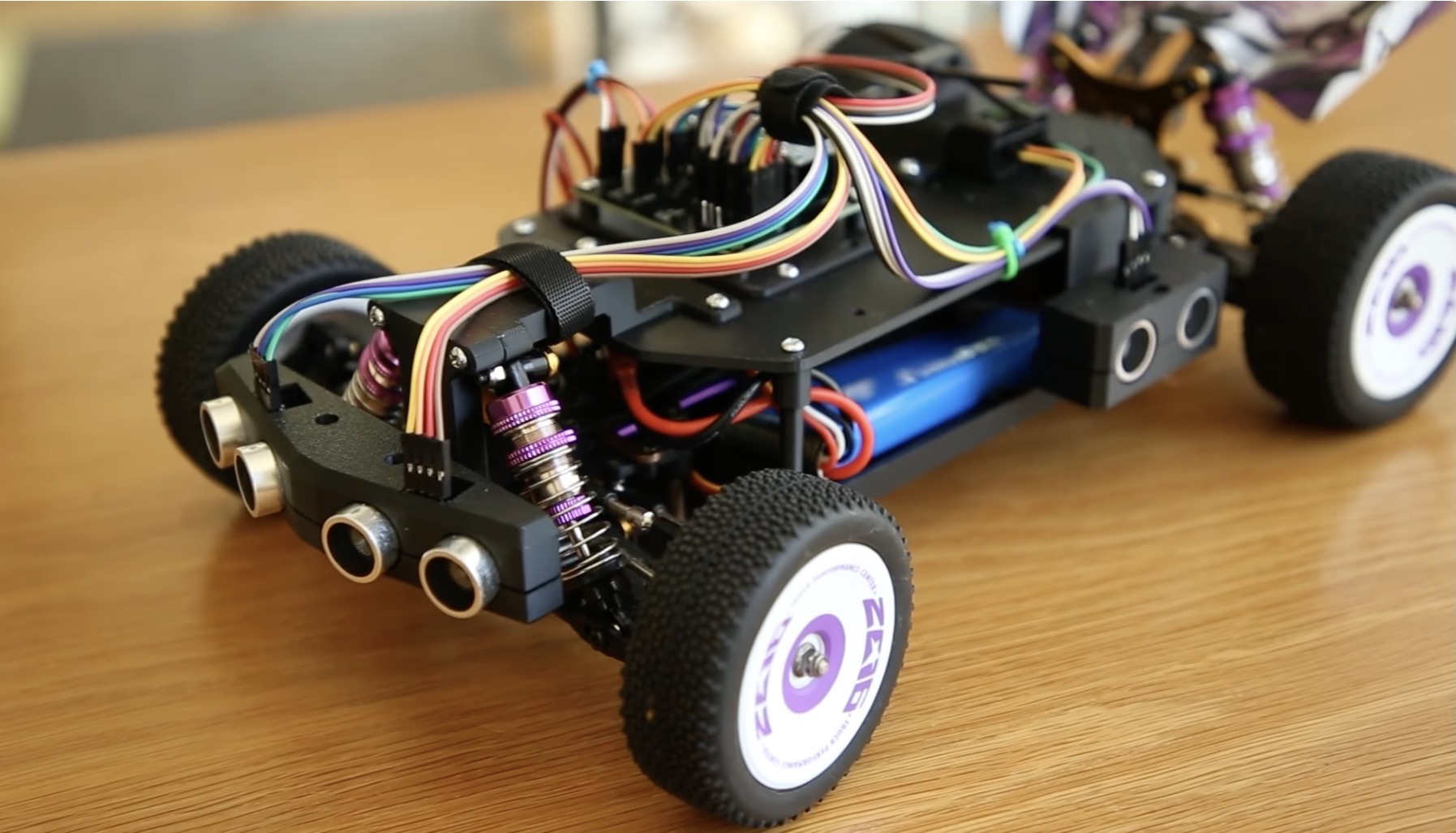
Second prize – “Rombot“: the alarm clock that you have to drive back to turn it off
Third prize – “InterVintage“: a domestic communication tool based on vintage stuff
Special Mention – “Coffee or Die“: a special interface for a flame
So far we’ve been organizing three Arduino Camps, and we have many requests of people willing to join or organize such an event all over the world to celebrate Arduino users’ community. That’s why for the next years’ edition we are planning to offer to community-based groups the possibility to organize their own hackaton on the same day in different locations. Same theme, a variety of approaches to solve a problem. Stay tuned!
L’estate non ferma l’appuntamento con l’Arduino Tour che, dopo Alessandria, continua il suo percorso verso Trento. Questa volta saremo ospiti della Fondazione Bruno Kessler, centro di ricerca di livello internazionale che ospita oltre 350 ricercatori in ambito scientifico, tecnologico, sociale e umanistico.
Come ogni tappa, l’appuntamento si snoda su 3 giorni. Il venerdì presentazione pubblica serale e i due giorni successivi, sabato e domenica, li dedicheremo a esplorare una panoramica degli impieghi di Arduino e permettere ai partecipanti di realizzare un piccolo progetto. Aspettatevi di lasciare il corso con una serie di strumenti per orientarvi in una crescente e variegata quantità di materiale per continuare ad imparare online.
Entrambe gli appuntamenti si terranno presso il Polo scientifico e tecnologico di Via Sommarive 18 – Povo (TN).
L’iscrizione al workshop vi permette anche di ottenere uno sconto del 10% per l’acquisto dell’Arduino Starter Kit o, se ce l’avete già, di altri prodotti dello store online.
I posti sono limitati, quindi se avete voglia di aprirvi al mondo di Arduino, affrettatevi a prenotare la vostra partecipazione cliccando su questo link.
the Arduino is used to read the state of the dual potentiometer that controls the volume and then translate this value into a certain number of LEDs being lit on the volume indicator.
An overview of the inside of the dock (very messy, I know )
I am using a dual potentiometer (2 pots in one). Here you can see one pot connected to the amplifier on the left to control the volume, and the other connected to the Arduino on the right to read the position of the pot.
Here you can see the 4 wires used to control the volume display connected to digital input 2, 3, 4 and 5 on the left side of the board. And you can see the potentiometer connected to 3.3V, analog input 0 and ground on the right side of the board.
Segui la diretta con Massimo Banzi, Riccardo Luna e altri ospiti che, in occasione dell’Arduino Camp stanno animando l’incontro intitolato “L’Innovazione dal Basso” e parlando di idee e persone che stanno cambiando il mondo senza chiedere il permesso a nessuno!
Open source, open hardware, peer-to-peer, creative commons: idee (e persone) che stanno disegnando un mondo che delle regole e dei modelli economici precedenti non sa che farsene, dove l’innovazione non passa solo dai laboratori R&D ma anche dalle scrivanie di un coworking, dove al mito del prodotto perfetto si sostituisce il concetto del sempre-migliorabile, dell’eterno beta, dove il fallimento non incute timore perché è una delle strade che portano al successo.
Un movimento frastagliato di volti nuovi e nuove idee che dal basso sale verso l’alto, che definisce nuovi stili di vita e nuovi modi di organizzare la società. Benvenuti nella Terza Rivoluzione Industriale.
Riccardo Luna, primo direttore di Wired Italia, con il suo nuovo libro “Cambiamo Tutto”,
Massimo Banzi, fondatore di Arduino,
Juan Carlos De Martin del Politecnico di Torino, tra i promotori dell’Agenda Digitale
Leonardo Camiciotti, responsabile del programma per la creazione di imprese innovative di TOP-IX.
Thanks to Lance who created a project on Instructables, you’ll be able to create remote-controlled eyes using Arduino Uno, two servos, some plexiglass and a couple of doll’s eyes.
If you like animatronics, watch the video below: the result is pretty scary!
Sabato e domenica prossimi presso la Fondazione Achille Castiglioni a Milano, Massimo Banzi terrà un workshop dal titolo “Arduino e la luce” in cui i partecipanti realizzeranno la Tinker Lamp (nelle foto) fabbricata digitalmente e disegnata dallo studio Habits, resa interattiva tramite Arduino.
Il ricavato del workshop andrà alla Fondazione Achille Castiglioni.
Ci sono ancora alcuni posti disponibili! Prenotatevi qui entro venerdì 14 alle 14.
Next weekend Arduino Verkstad in Malmö is organizing a one-day workshop in collaboration with Sony Mobile to experiment on programming from the Arduino IDE on Sony SmartWatch.
You don’t have to be a programmer to participate because this is low level hacking and if you, for example, are interested in graphic design or interaction design this might be something for you. Participants will work in groups and get tutoring throughout to test the watch and modify it on custom ideas.
Kris Temmerman, a freelance creative developer based in Belgium, just published a nice report on how he built a painting machine running on an Arduino Due and an Android tablet.
I was always interested to remove the perfection from computer graphics. So thought it would be fun to try to make the most obvious thing first. A machine that uses a paint brush to print a drawing.
Open source code is typically created as a collaborative effort in which programmers improve upon the code and share the changes within the community. Arduino and many other projects share a similar philosophy of creating free open source tools allowing non-technical people to work with hardware and software.
Arduino is based on the contribution of many other open source projects. We are grateful to these efforts and want to support them. Since we’re not always able to contribute code or technical support we want to do it through donations.
From now on every year Arduino will donate to the open source projects it collaborates with and shares Arduino approach and philosophy.
In 2013 the institutions to which Arduino donated 2,500$ each are the following:
A maglev is just like a conventional train but instead of wheels it has magnets and it levitates!
The team did a great job not only for the results achieved but especially in sharing the project’s documentation, detailed with all the steps for the construction through videos and pictures so that others can more easily follow in their footsteps.