One year of UNO Q: built together, open by design
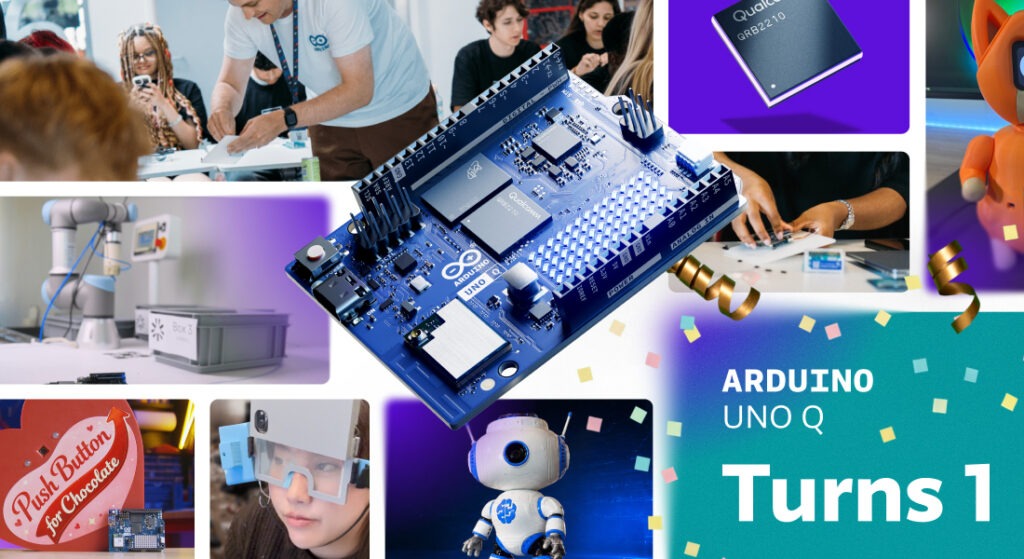
A year ago, we shared two pieces of news at once. Arduino was joining the Qualcomm Technologies family, and the Arduino® UNO™ Q board was on its way.
The promise was simple: bring real computing power and edge AI to makers, students, and professionals, without losing the openness and joy that make Arduino what it is.
Twelve months later, you have responded to our biggest announcement ever in ways we could not have scripted.
Thank you.
The year in numbers*
You didn’t just try UNO Q. You built an ecosystem around it.
- 270,000+ UNO Q shipped worldwide
- 400+ events across the ecosystem
- 4,000+ contest participants, who delivered 250+ official builds
- 850+ topics about UNO Q on the Arduino Forum
One year in, the Arduino community continues to grow and thrive. The number of projects shared on Project Hub has nearly doubled year on year, while Arduino library downloads grew roughly 50% year on year, reaching 244+ million downloads in the last 12 months, compared with 165+ million in the previous year. The Arduino IDE also reached 35+ million downloads
Behind those numbers is something more interesting: a year of people discovering what happens when Arduino meets serious computing and AI.
*As of September 29, 2026
Where it started
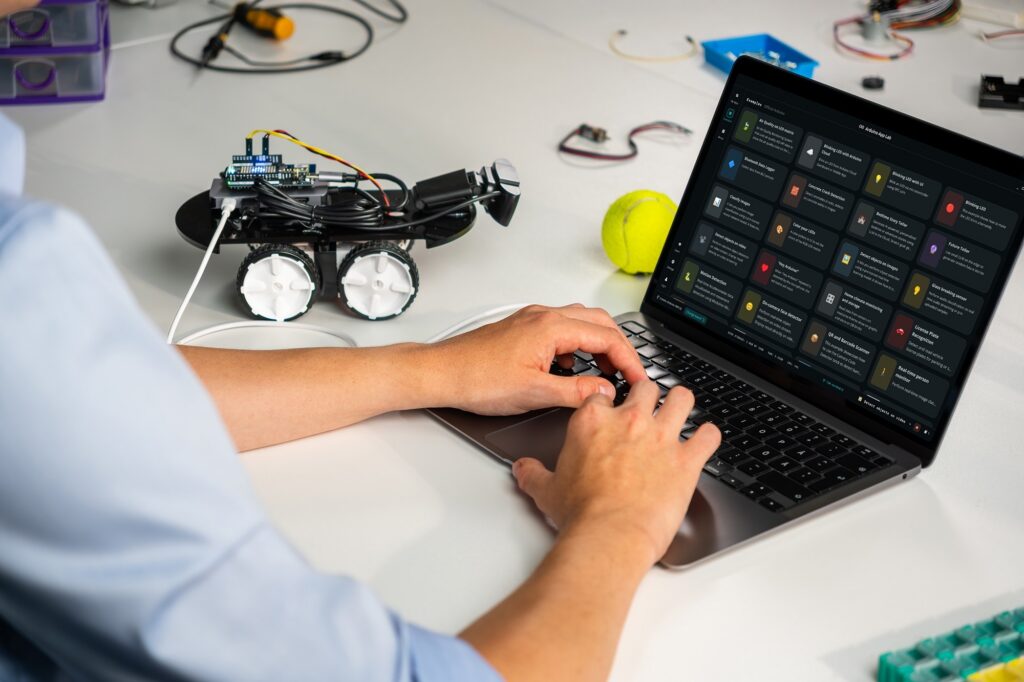
UNO Q brought together two worlds that had rarely lived on the same Arduino board: a Qualcomm Dragonwing™ QRB2210 microprocessor, with AI acceleration, quad-core performance and graphics, coupled with a real-time STM32U585 microcontroller.
That combination is what makes UNO Q different. One side can run Linux, AI models, and demanding applications. The other can handle deterministic, real-time control. Together, they let developers bring the two worlds together in a way that feels like Arduino.
UNO Q launched alongside Arduino® App Lab, introducing a new way to build: an Arduino sketch on the MCU working together with a Python program on the MPU, packaged as one application. Suddenly, projects that once needed separate boards, computers or more complicated setups could start from a single Arduino.
Debian Linux for UNO Q brought a curated Linux environment to the board, making it easier to get started with the MPU side of the board. Arduino App Lab evolved throughout the year, adding new capabilities and workflows. We also brought Qualcomm Linux to UNO Q, giving developers another path into the Qualcomm ecosystem while keeping Arduino at the center of the experience.
In August, Agentic Mode brought AI-assisted development to an Arduino desktop IDE for the first time.
Your ideas, our proudest moments
From computer vision and local LLMs to music, healthcare, and smart everyday tools, we’ve seen an incredible range of ideas take shape.
We selected 12 standout projects that capture just some of the creativity and ambition of the UNO Q community.
And the creativity is still unfolding. Our Invent the Future with Arduino UNO Q and App Lab contest with Hackster is wrapping up, with the winners set to be announced on October 9. See the contest on Hackster
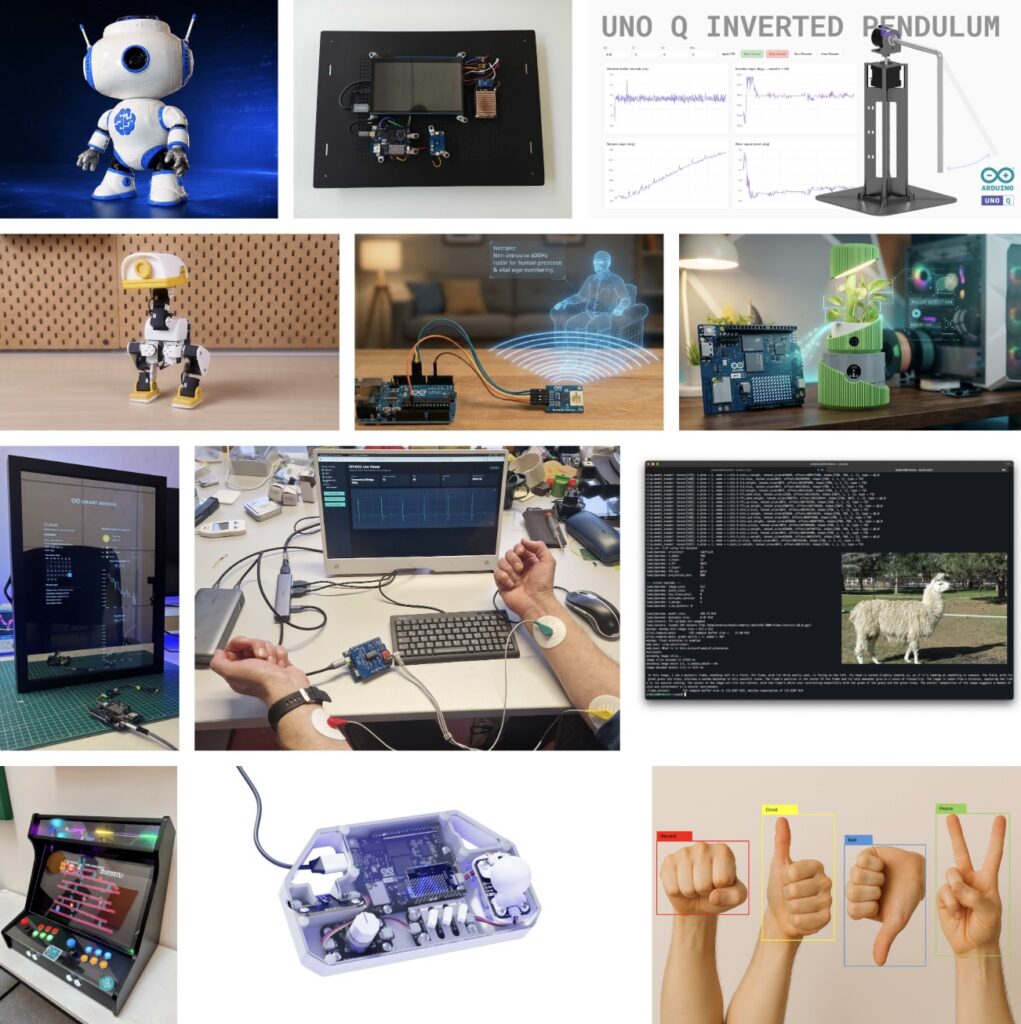
- JBR-001, a desktop companion robot
- XGO-Duck, a fully open-source robot
- DIY-ECG, exploring real-time health monitoring
- Local LLMs and VLMs on UNO Q
- NetraHz: Camera-free fall detection
- DIY Synth
- Gesture Detection
- Arcade Cabinet
- Inverted Pendulum
- Local Weather Station
- Smart Mirror
- AI Plant Guardian
Open by design: UNO and beyond
When Arduino joined Qualcomm, some wondered what it would mean for Arduino’s open approach. One year later, the answer is simple: openness remains at our core.
Arduino remains open source, with open hardware schematics and software under MPL, AGPL, and GPL. And this year, we continued to open up the tools behind UNO Q, including Arduino App Lab, available on GitHub for developers to explore, contribute to, and build on.
And the work this year has not been limited to UNO Q. Throughout this time period, we also unveiled several new products under the same ethos, ranging from the Arduino® Starter Kit™ R4 and Arduino® Nesso™ N1 to no less than eight (eight!) new Arduino® Modulino™ nodes. Motors, Joystick, Latch Relay, Light, LED Matrix, Vibro, Hub, and Extender may be tiny in size, but easily add so many different functionalities to your projects: you can check out the Arduino® UNO™ Q DIY synth bundle and Arduino® UNO™ Q Arcade bundle to get an idea of how well they work to bring ideas to life. Plus, Arduino Cloud got even better!
Meanwhile, Arduino Core on Zephyr reached version 1.0, moving beyond its beta phase and providing a solid RTOS foundation for Arduino boards with an MCU, including UNO Q as well as the new Arduino® VENTUNO Q board.
Stronger together
Qualcomm is deepening its own open source commitment as well. Its business success depends on open standards, upstream collaboration, and transparent participation in the ecosystem.
A couple of months ago, we introduced VENTUNO Q, bringing substantially more computing and AI capability to Arduino developers. It opens the door to more demanding applications while keeping the development experience familiar.
A year ago, UNO Q was a new board. Today, it’s a growing platform, a new way of developing with Arduino, and, most importantly, a community of people finding out what it can do. Arduino and Qualcomm are stronger together!
A prototype is only the beginning
You can start with a prototype on UNO Q or VENTUNO Q and, as your requirements evolve, move to more advanced platforms and commercial-ready solutions while keeping the tools, models, and applications you already built.
Beyond it, the wider Qualcomm Dragonwing family supports industrial and production-scale deployments.
The software stack follows you, too:
- Arduino App Lab for building and packaging your application
- Edge Impulse for production-grade pipelines
- Foundries.io for secure updates and fleet management once you deploy at scale.
- Qualcomm AI Hub for optimized models
Finally, this year we also launched Works with Arduino, a program enabling partners to certify their System on Modules and developers to take apps built with UNO Q or VENTUNO Q to compatible hardware without changing a line of code. With App Lab, applications are packaged as a single App Release, making it possible to move from prototype to production in minutes, not weeks.
It is a direct bridge from prototype to commercial-ready hardware, and a path to the 33M+ Arduino developer community for partners.
And the community came together beyond the projects too. Alongside Qualcomm, we brought UNO Q to CES, MWC, and the Mission44 Workshop, meeting developers, makers, students, and industry leaders, while showing what this new generation of Arduino-powered computing can do.
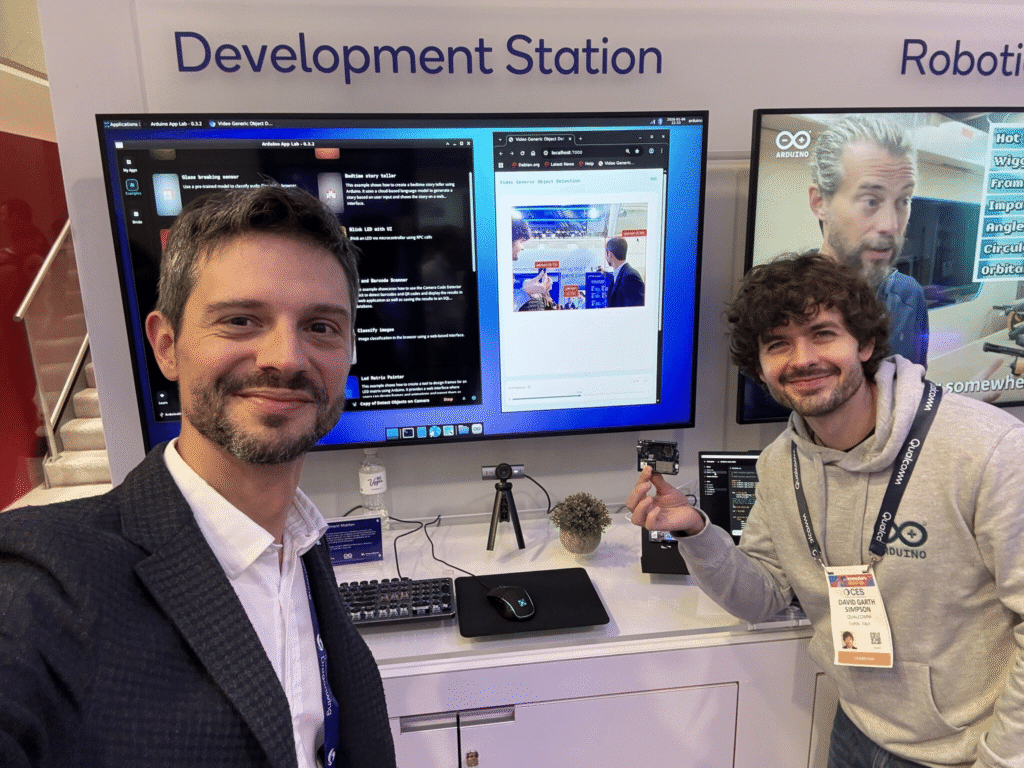
The Arduino team at the Qualcomm booth at CES (January 2026)!
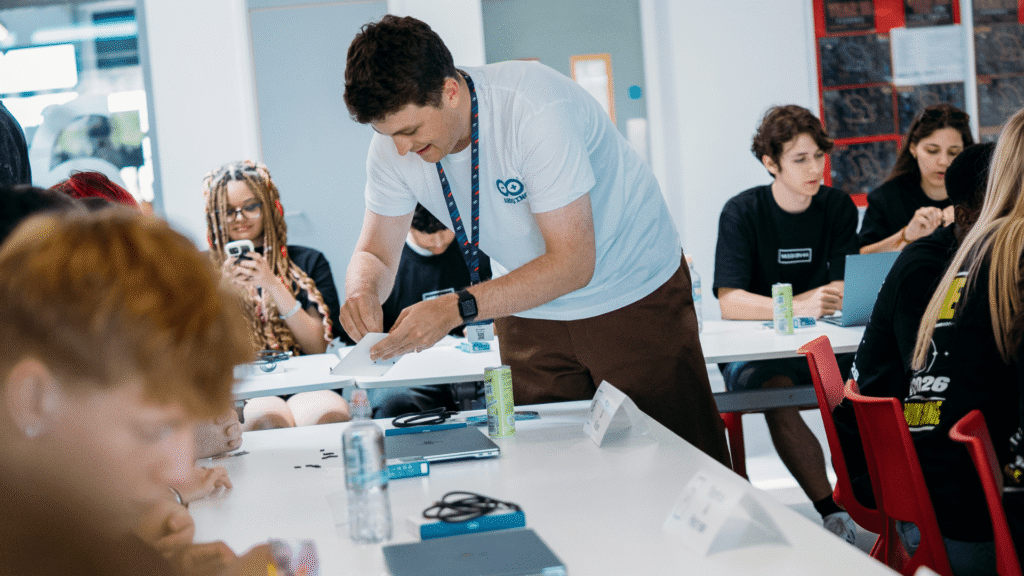
Mission 44 students at Silverstone getting hands-on with UNO Q and AI-powered racing telemetry (June 2026).
It is just the beginning
Year one showed that powerful, open, and simple can go together. It showed us what happens when you put new tools in the hands of a curious community, and let them take it somewhere you didn’t expect.
Year two is about going further: more tools, more partners, and more ways to turn an idea into something real.
Happy first birthday, UNO Q!
And to everyone who built, shared, taught, hacked, and dreamed with it this year: thank you. The best is still ahead.
Qualcomm branded products are products of Qualcomm Technologies, Inc. and/or its subsidiaries.
Arduino, Modulino, Nesso, UNO, Starter Kit, and VENTUNO, and the Arduino logo are trademarks or registered trademarks of Arduino S.r.l.