Inside the winning Arduino® UNO™ Q projects from Hackster’s Invent the Future competition
Arduino, Qualcomm Technologies, and Edge Impulse recently teamed up with Hackster to host the Invent the Future competition. The competition attracted 4,028 registrants and 1,202 hardware applications, culminating in 153 final project submissions across a wide range of real-world applications.
There were several categories in the competition, all unified by the UNO Q board and Arduino® App Lab. The judging is officially complete and the winners have been announced, which means we get to show you the top projects that most impressed the judges and took home the awards!
These winning creations illustrate a range of uses for the UNO Q – and stay tuned, because we’ll also be shining the spotlight on many other fantastic contest submissions in the coming days.
Best Social Impact
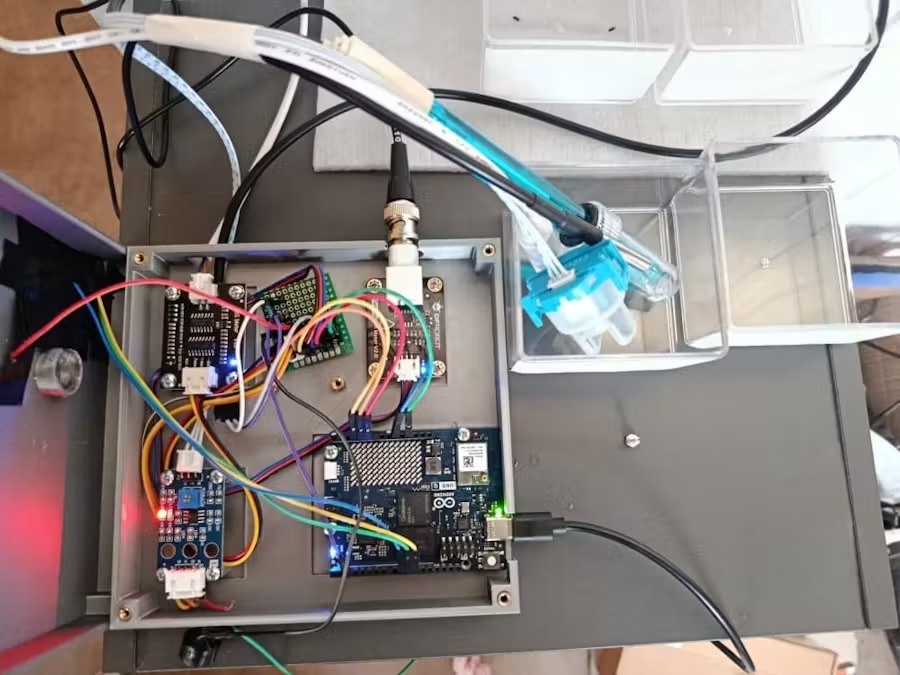
While sustainability was a consideration for every category, the Best Social Impact award went to a project built explicitly to make the world a better place. The winning project was the Smart Water Guardian AI, built by KOCHONI Biaou David Barthélémy.
This project puts the edge AI capabilities demonstrated by UNO Q to good use, by monitoring water-quality indicators in real time. Through a host of sensors, it is designed to measure everything from temperature and pH to turbidity and dissolved solids content, allowing for detection of anomalies that correlate with poor water quality – detection that could save lives.
Best in Home Automation
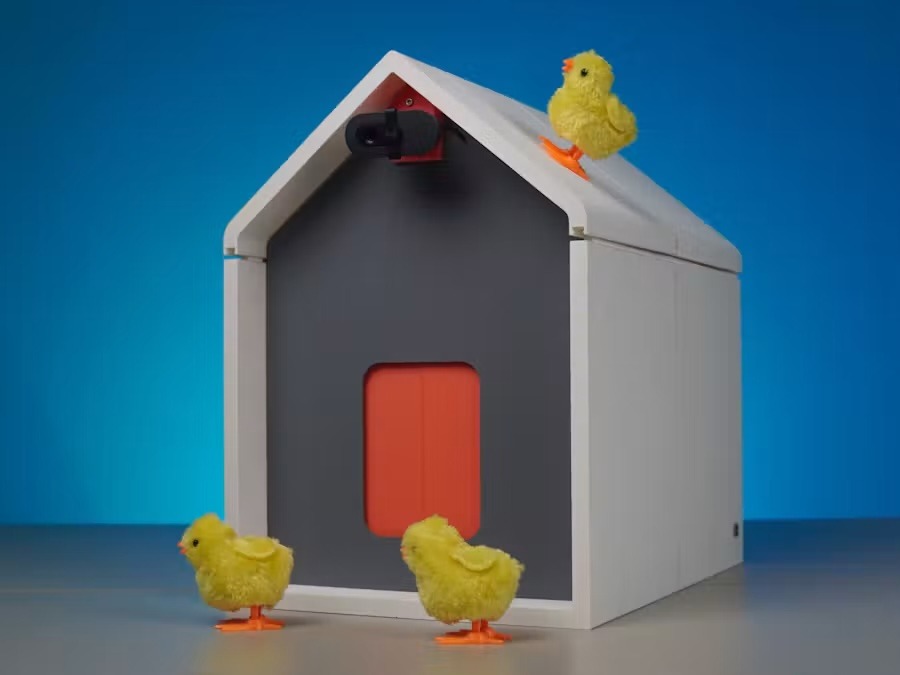
Home automation is a thriving industry, and there are all kinds of tech products you can use to build the smart house of your dreams. But what about your chickens’ house? That’s what Coders Cafe’s Smart Coop 2.0 is for.
Smart Coop 2.0 is a system design, driven by an UNO Q, for intended to support routine chicken care. It is built to handle the basics, like dispensing feed on a schedule and heating the space, using local AI models designed to detect eggs and potential predators. The creator designed Smart Coop 2.0 to make certain chicken-care tasks more convenient and to detect potential predators, including coyotes and foxes.
Best in Gaming
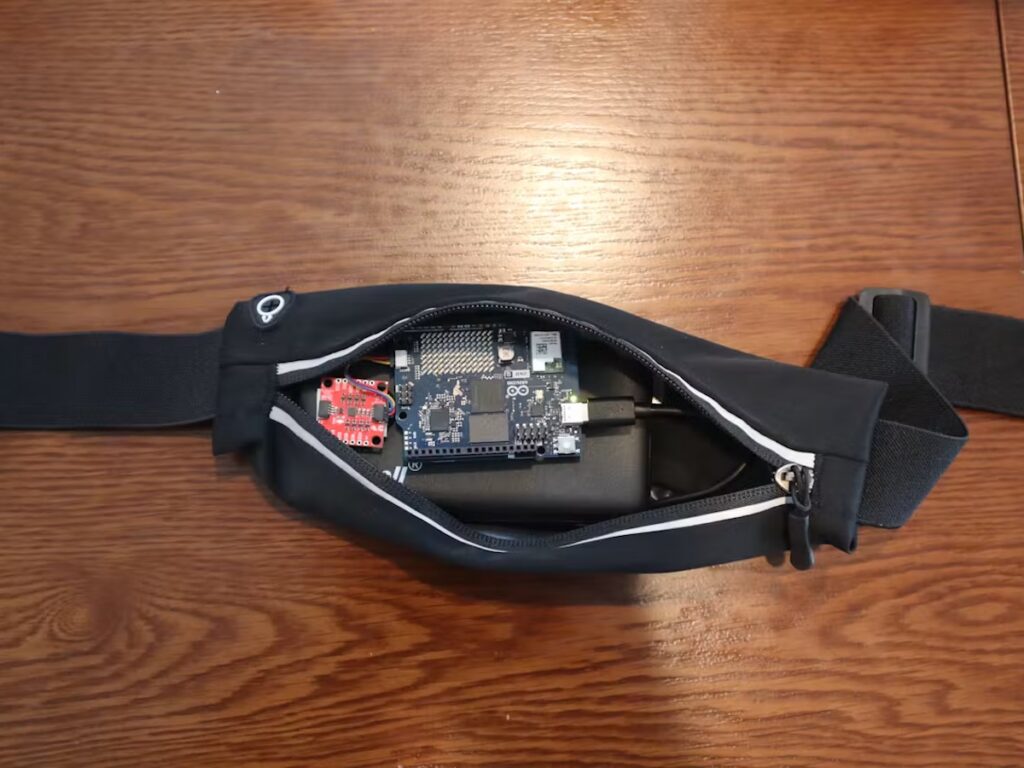
RollerCoaster Tycoon was a popular video game generally among two types of people: those who enjoy creative building and those who like maximizing metrics. Kevin Loeffler is the latter type, and he wondered how real-life roller coasters might stack up. The result is RCT IRL, which is a wearable sensor system for classifying and quantifying roller coaster rides.
“Wearable” here means an UNO Q, a SparkFun 9DoF IMU (inertial measurement unit), and a battery stuffed into a fanny pack. During a coaster ride, the dual-brain board from Arduino is structured to collect movement data through the IMU. Afterwards, three Edge Impulse models are designed to process the data and generate model-based scores labeled Excitement, Intensity, and Nausea. Together with interesting stats like ride time and maximum g-forces, those values populate a report card for the roller coaster, just like in the game.
Best in Industrial IoT
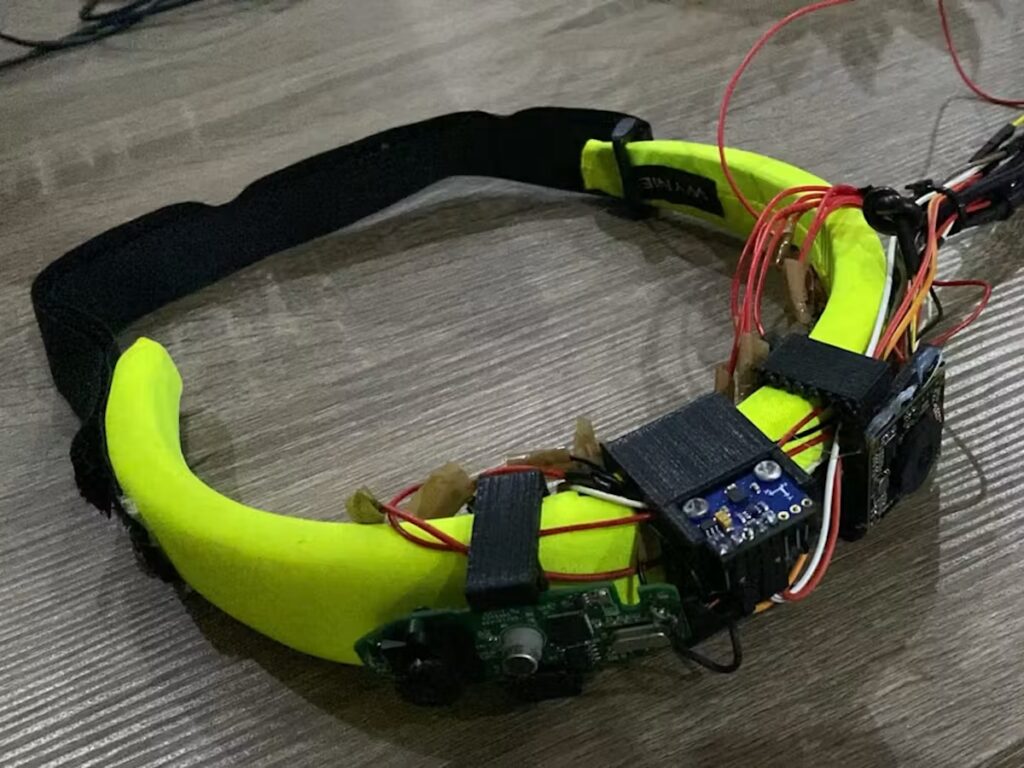
HaloSense V1 is pasquale887’s attempt to give humans new senses via neuroplasticity. In short, neuroplasticity is your brain’s ability to accommodate new functions. Of course, there isn’t anything supernatural or superhuman about that, and your brain can only work with the sensory input it receives. HaloSense V1 provides new information through the senses you already have.
Or, to put it another way, HaloSense V1 is a haptic feedback headset. Through an array of 13 haptic feedback motors, it pulses and buzzes to convey information gathered through sensors connected to an UNO Q. The project is intended to explore whether, over time, a wearer can learn to interpret the haptic patterns as information.
Best in Robotics
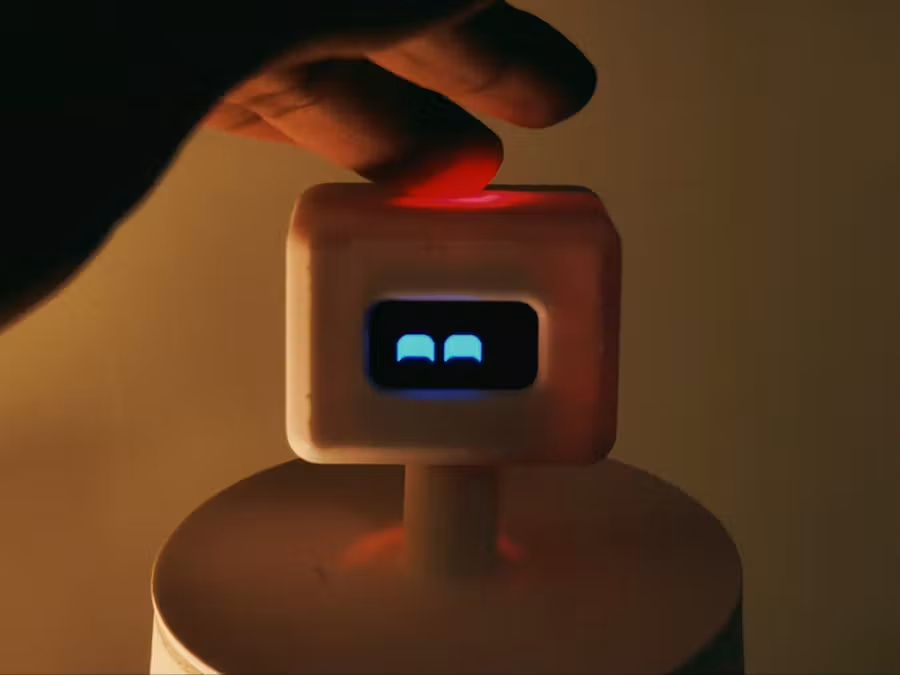
We’re in the midst of a shift in robotics towards human-friendly designs. Mohammed Akramuddin’s Curie is engineered to be as friendly as it gets. This little desktop robot is cute, with facial expressions displayed on an OLED screen. The creator designed it to help users, including those with ADHD, manage tasks.
Like all of the other projects in this competition, Curie contains an UNO Q board. It connects to various APIs, including Groq (a cloud interface that is built to let developers run open-source artificial intelligence models at high speeds), to help its owner manage their workload. It is designed to do that in the usual digital assistant ways, by taking notes and setting reminders, but also by providing more tailored assistance. It can, for example, break a complex task up into small pieces that are more approachable. It is also designed to identify potential distraction and provide a nudge to help users return to their task.
Best in Show
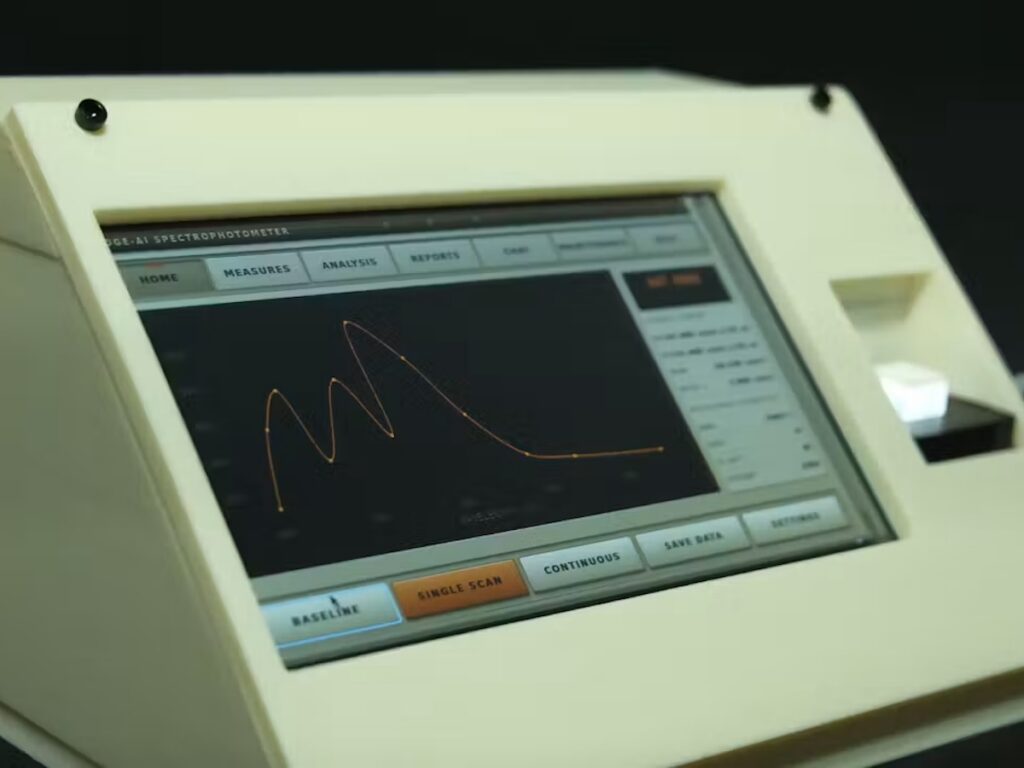
The Best in Show award went to the overall competition winner, regardless of category. The winner was Jorge Eldis González for his work on the Edge-AI Spectrophotometer, which is, as its name indicates, a spectrophotometer that integrates AI on the edge.
A spectrophotometer measures the wavelength of light, in order to detect the properties of sampled materials. That is a non-destructive analysis and can, for instance, tell you if a sample contains contaminants.
The Edge-AI Spectrophotometer is built using commercially available components, using an UNO Q and a SparkFun Electronics AS7343 Triad Spectroscopy Sensor. It then runs a machine learning inference model on the edge, which detects deviations from known baselines. The creator designed the project to make its testing workflow more accessible to less-experienced operators and to explore additional spectrophotometry applications.
Congratulations to all the winners!
Qualcomm branded products are products of Qualcomm Technologies, Inc. and/or its subsidiaries. Arduino, UNO, and the Arduino logo are trademarks or registered trademarks of Arduino S.r.l.