Turn Arduino® UNO™ Q into your local 3D printing watchdog
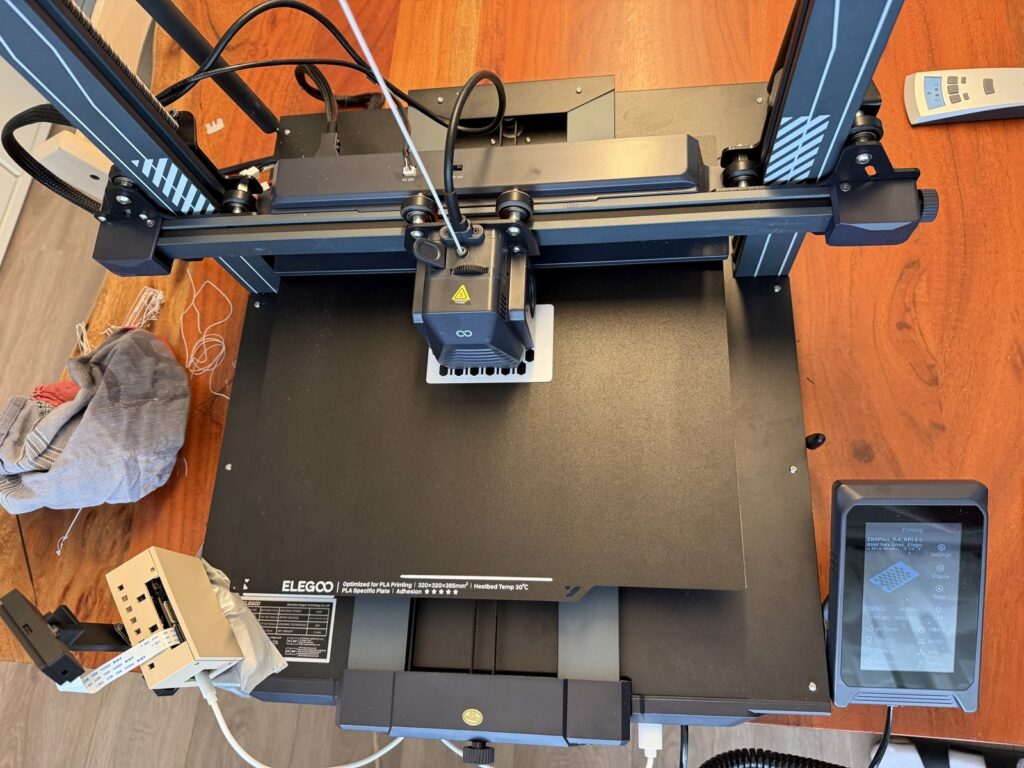
A lot of newer 3D printers incorporate sophisticated sensor suites and cameras to detect problems with print jobs, like the dreaded “spaghetti failure.” Those work pretty well and prevent wasted time, wasted filament, and even damage to the printer. But what if you don’t have a printer with those features? Or if you want to protect your privacy? Then you can follow Philipp Schweizer’s guide to use an Arduino UNO Q as your local 3D printing watchdog.
Schweizer’s approach is to use the UNO Q and a camera to detect anomalies, rather than specific problems. It doesn’t look for spaghetti failure or clogging. Instead, it looks for a normal print. Anything abnormal gets flagged. That dramatically reduces the amount of training data required and accounts for all visible issues, whether they were anticipated and trained for or not.
The hardware required for this includes an UNO Q (4GB model), an Arduino®UNO™ Media Carrier, an V2-style IMX219 camera module, and a custom-printed mount with fasteners. The goal with that mount is to point the camera at the hot end and below, so it will likely require customization to fit the 3D printer model in question.
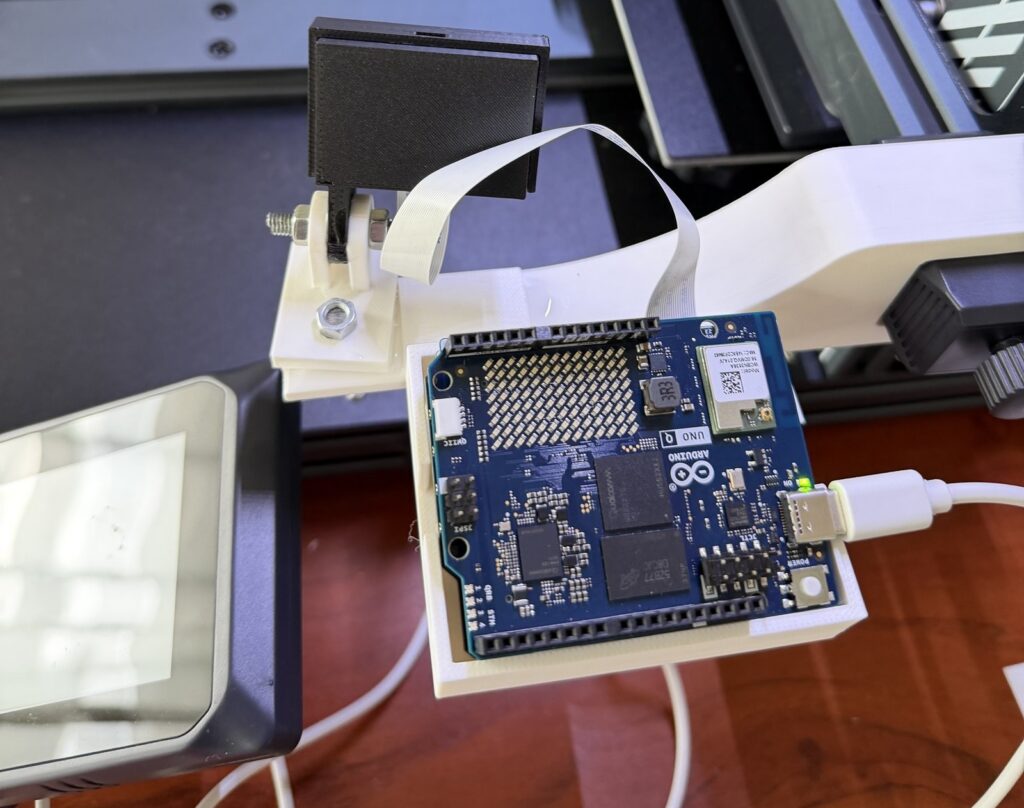
All of the magic happens thanks to the FOMO-AD anomaly model from Edge Impulse, implemented through Arduino App Lab. That requires training on images of normal prints and Schweizer explains how it is easy to collect those automatically during print jobs. By keeping the image resolution low (632×480), the overhead remains minimal and the model efficient.
As Schweizer points out, an overeager watchdog is worse than not having a watchdog at all. For that reason, Schweizer built his app so that it only automatically pauses a print if at least three out of the last four images show an anomaly. When that is the case, it pauses the job through the Moonraker API (standard for Klipper-based systems). For those who don’t use Klipper, it is possible to integrate the watchdog into Octoprint or other control software. It also sends an MQTT message compatible with Home Assistant for notifications and hosts a webpage where the status is visible.
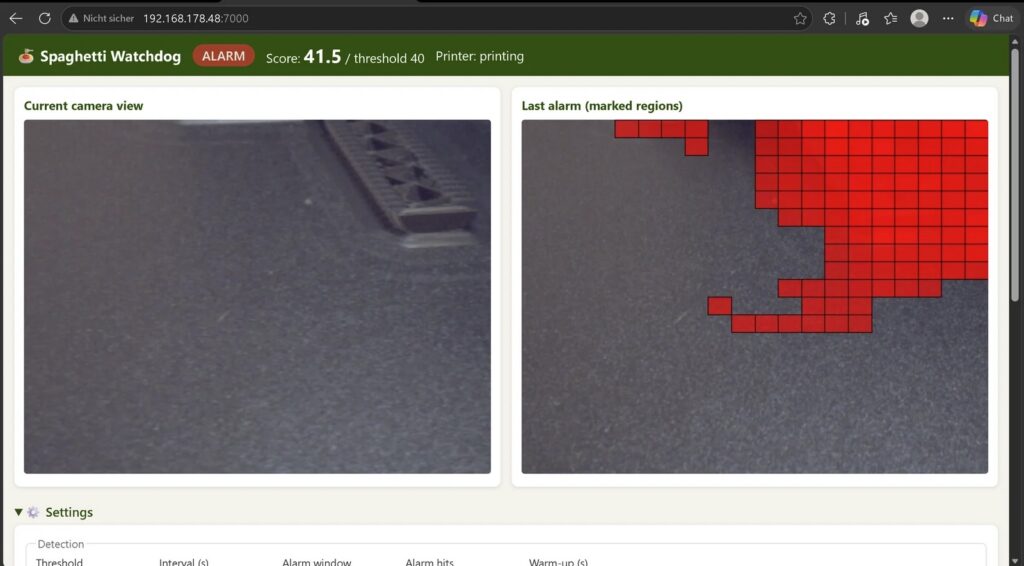
All of that works without leaving the local network, so it is great for those who value privacy and security. Even if those factors don’t concern you, this is an affordable watchdog solution that doesn’t require a specific 3D printer model or a subscription service.